
Environmentally Friendly Cleaning Products: A Practical Guide
Keeping a home clean need not mean relying on harsh chemicals or creating unnecessary waste. Environmentally friendly cleaning products can help reduce the impact of everyday cleaning while still tackling dirt, grease and odours. With a little care when choosing and using them, it is possible to build a cleaning routine that is kinder to the environment and practical for daily life.
What makes a cleaning product environmentally friendly?
There is no single feature that makes a product automatically “green”. A more considered choice takes several things into account: the ingredients, packaging, manufacturing and how the product is used and disposed of.
- Ingredients: Look for clear ingredient information and products that avoid unnecessary or particularly hazardous substances.
- Packaging: Concentrates, refill pouches and recyclable or reusable containers can help reduce packaging waste.
- Certifications: Recognised environmental labels can offer helpful guidance, although it is worth checking what each certification covers.
- Performance: A product that works well at the recommended dose can help avoid repeated cleaning and overuse.
Choose products for the job
It can be tempting to buy a separate cleaner for every surface, but many households can manage with a small selection of suitable products. A general-purpose cleaner may be enough for everyday surfaces, while a dedicated product can be useful for jobs such as limescale removal or cleaning glass.
Always check the label before using a product, particularly on delicate materials such as natural stone, wood or treated surfaces. Using the wrong cleaner can cause damage, regardless of its environmental credentials.
Consider concentrates and refills
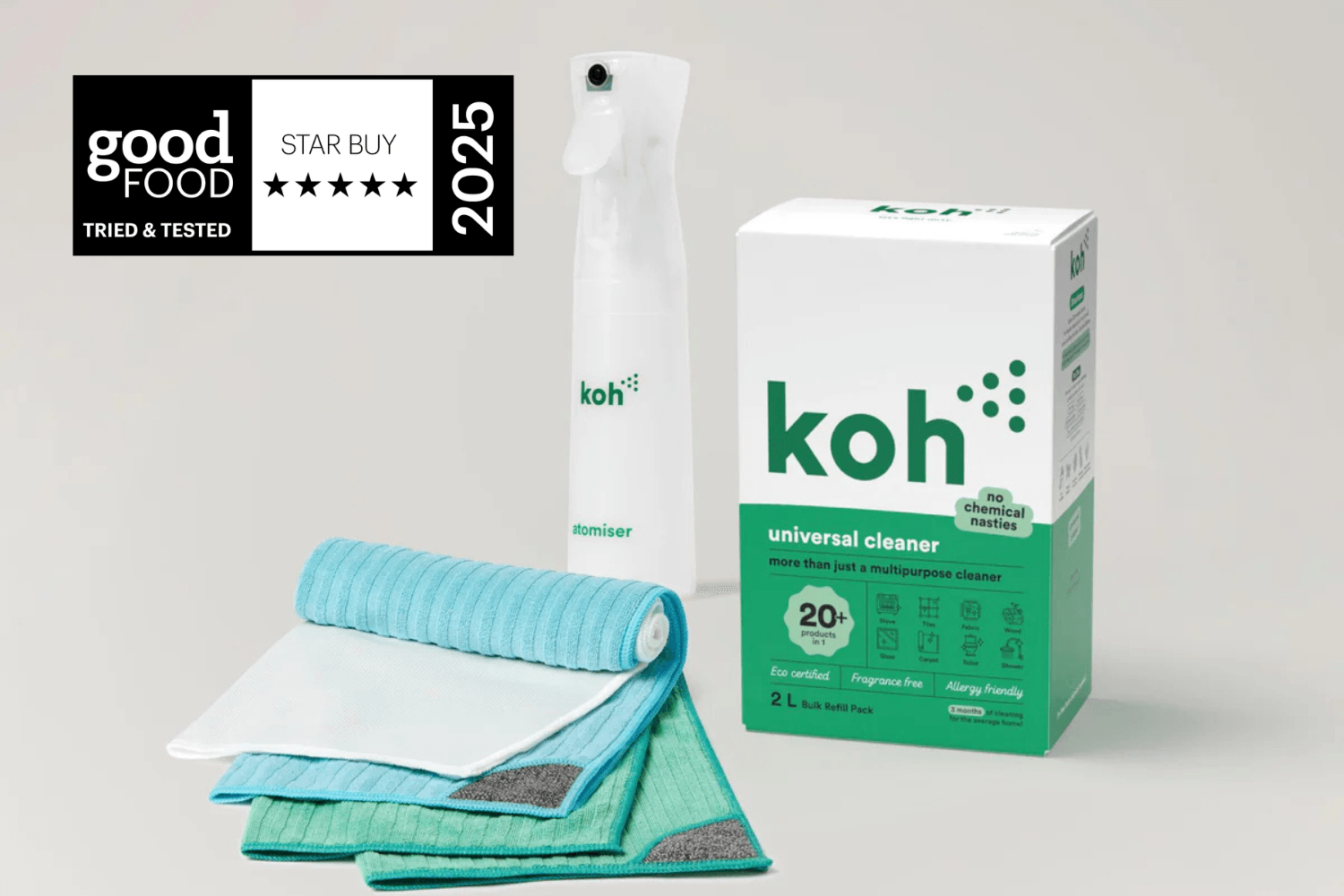
Concentrated cleaners are designed to be diluted, so one bottle can go further and may require less packaging and transport than multiple ready-to-use products. Refill systems can also reduce the number of containers that need to be discarded.
Follow dilution instructions carefully. Using more product than recommended does not necessarily clean better and may leave residue behind. Reuse a container only if the manufacturer says it is suitable, and label it clearly to avoid confusion.
Use cleaning products safely
Environmentally friendly does not mean harmless. Cleaning products can still irritate the skin or eyes, and some must not be mixed with other substances. Read the instructions, use the recommended amount and keep products away from children and pets.
Never mix cleaning products unless the label specifically says it is safe to do so. In particular, mixing bleach with other cleaners can produce dangerous fumes. Ventilate the room where appropriate, and store products in their original containers whenever possible.
Reduce waste beyond the bottle
Small changes to cleaning habits can make a difference. Reusable cloths and washable mop heads can replace many disposable alternatives. Using the right tool for the job, cleaning spills promptly and maintaining appliances can also help reduce the need for intensive cleaning.
When a product is finished, follow the packaging instructions and local council guidance for recycling or disposal. Do not pour leftover chemicals down the drain unless the label advises that this is safe.
Be cautious of vague claims
Terms such as “natural”, “eco” and “green” can be used broadly and do not always explain a product’s real environmental impact. Look for specific information about ingredients, packaging and recommended use. Independent certification can be useful, but no single label tells the whole story.
A more thoughtful cleaning routine
Choosing environmentally friendly cleaning products is not about finding one perfect solution. It is about making informed choices: buying only what is needed, following instructions, choosing refillable or recyclable packaging where practical, and using products safely. These straightforward habits can support a cleaner home while helping to reduce waste and avoid unnecessary chemical use.
Top 5 FAQs About Eco-Friendly Cleaning Products: Discovering Sustainable Solutions
- What is the most environmentally friendly way to clean?
- Is Zoflora eco-friendly?
- What are the most natural cleaning products?
- Is Ecover actually better for the environment?
- What are the environmentally friendly chemicals for cleaning?
What is the most environmentally friendly way to clean?
The most environmentally friendly way to clean is to use only what you need: choose a small number of effective products with clear ingredient information, use the recommended amount, and opt for concentrated or refillable options where possible. Reusable cloths and washable mop heads can help reduce waste, while regular light cleaning may prevent the need for stronger products later. Always follow the label, never mix cleaning products, and dispose of leftovers and packaging in line with local guidance.
Is Zoflora eco-friendly?
Zoflora is a concentrated disinfectant, so a small amount can make up a diluted cleaning solution, which may help reduce packaging and transport compared with some ready-to-use products. However, it contains disinfecting chemicals and fragrances, so it should not automatically be considered an environmentally friendly choice. Use it only as directed, avoid using more than needed, never mix it with other cleaners, and follow the label and local guidance for disposal. If environmental impact is your priority, compare the ingredients and packaging with products carrying a recognised environmental certification.
What are the most natural cleaning products?
The most natural cleaning products are often simple options such as white vinegar, bicarbonate of soda and fragrance-free soap, which can be useful for everyday tasks. However, “natural” does not always mean harmless or suitable for every surface: vinegar can damage stone, while cleaning products should never be mixed unless the label says it is safe. For an effective, lower-impact choice, check ingredients and usage instructions, choose refillable or recyclable packaging where possible, and use only the amount recommended.
Is Ecover actually better for the environment?
Ecover may be a more environmentally considerate choice than some conventional cleaners, as many of its products use plant-based ingredients and are designed with biodegradability and packaging impacts in mind. However, that does not make every product impact-free, and the overall benefit depends on its ingredients, packaging, how it is made and transported, and how much you use. Check the label and any relevant independent environmental certification, follow the recommended dose, and compare products on a like-for-like basis rather than relying on the brand name alone.
What are the environmentally friendly chemicals for cleaning?
Environmentally considerate cleaning ingredients can include citric acid for limescale, acetic acid (vinegar) for some everyday cleaning, bicarbonate of soda for gentle scrubbing and odour control, and biodegradable, plant-derived surfactants to lift grease. Hydrogen peroxide can be a useful alternative for certain cleaning tasks, but it should be used according to the label. No ingredient is harmless in every situation, so check product instructions, use only the amount needed and never mix cleaners—especially bleach with acids such as vinegar.
Tags: chemical safety, cleaning concentrates, cleaning product ingredients, cleaning routine, eco-friendly cleaners, environmentally friendly cleaning products, green claims, household cleaning, product certifications, recyclable packaging, refillable containers, responsible product disposal, reusable cloths, safe cleaning practices, sustainable cleaning, waste reduction